Posts

Leading Social Committee at Homeowners Association Perfect Way to Serve

Image
I have been attending meetings of some area homeowners’ associations and the agendas and board discussions seem to be written by the same person. Agenda topics almost always include people late in paying dues, problems with cars or basketball goals blocking sidewalks, trailers or RVs, permission to make changes to a home, barking dogs and neighborhood violations.  The topic of empty seats on the board and a need for volunteers always come up too. If you have attended public or community-based meetings in southwest Missouri over the last two or three years, those meetings are starting to sound the same too. The focus is on issues like unruly youth, police, drug sales, lose of local merchants, school issues, lack of space for community use, hand complaints about the unresponsiveness of city officials. In both types of meetings, deliberation centers on who is to blame for each issue and what can be done to change them after identifying the issues. Typically, the blame falls ...

Let Us Gather: Building Relationships with Neighbors is Key

Image
What follows are fun, easy, and inspiring ideas for gathering. These ideas come from a combination of my experiences and our partners' recommendations. These are just ideas – you decide what works best in your neighborhood. The most important thing is that whatever you choose, remember the goal is to build relationships and connections among neighbors, not entertain them. Gathering ideas: Yard sale (with neighbor discount) Ice cream social Donuts in the driveway Goodies in the garage Pancakes on the porch Book exchange Outdoor movie screening Neighborhood walking tour Kite flying Bake sale for charity Whiffle ball tournament Ping pong tournament Slip and slide Lemonade stand Cookie exchange Get a lawn charge and a cooler with drinks for a driveway chat with neighbors

What “loving your neighbor” is not

Image
  I get a daily Google Alert by email with links to stories, articles, and videos that use the phrase "Love Your Neighbor." Skimming those links shows hundreds, if not thousands, of examples of what that phrase is not. First, "love your neighbor" is not a political weapon. A popular weaponization of the phrase is to claim a particular politician is not true to their values because they are not approving of a policy that others have determined represents the action of "loving your neighbor." You can lump many of today's hot-button political topics in this category. But loving your neighbor is not a phrase about political policy.  Second, "love your neighbor" is not a yardstick you use to determine how others measure up. Very clearly, the statement is personal and demands an answer to this question: how do YOU love your neighbors? I see in other articles the author's finger-pointing at others. But, loving your neighbor is not a phrase meant...

Do Not Overlook Your Invisible Neighbor

Image
  I was never part of the "in crowd" growing up. I do not know that I especially aspired to be when I was younger, but as an adult, it does look like fun! Unfortunately, being part of the "in crowd" is often based on what we can do for someone else. And it often focuses on exterior appearance. As I often share with others, I personally have a face for radio. But also as an adult, I have discovered that we are not called to be part of the in crowd. We are called to reach out to and include those who are invisible.  I also cannot claim to have done that well. But I sure aspire to do better. It starts with identifying the "invisible" or those who are overlooked. This would include individuals like widows, persons who are disabled, the lonely and the forgotten.  Pay attention to the invisible! Not only do they have talents to offer, but I know for me personally, we are commanded to reach them, not forget them. Pause and take note of those on your street who ar...

Time to Examine Yourself: Are You a Good Neighbor?

Image
Finding a good neighborhood to call home is an accomplishment for many people. Just Google “great neighborhoods” and pages of results will appear. Multiple websites have been developed to find the best neighborhoods, greatest schools, and safest communities. But what qualifies these neighborhoods as being good and how can we make our own neighborhoods better? Tim DeTellis, author of “Good Neighbors Make Great Neighborhoods,” believes great neighborhoods begin with people taking agency as neighbors.   In his TEDx Eustis, Florida talk “Are You a Good Neighbor”, Tim DeTellis admits he wasn’t always a good neighbor. His lifestyle and career had limited Tim’s interactions with his local community. He’d often come home after traveling for work and isolate himself in his house. Habits like these had created a divide between Tim and those living closest to him. He had neighbors to his left and right, but he only knew their names. Tim DeTellis hadn’t always lived in seclusion. Growing u...

Mowers Needed: Helping Neighbors Can Earn You a New Mower

Image
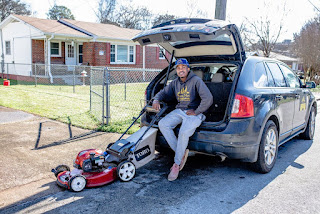
  In a world of outrageous and silly Internet challenges, it is nice to see one challenge spreading kindness among neighbors and encouraging a work ethic in youth. The challenge is called the 50-Yard Challenge. The group behind the 50-Yard Challenge is Raising Men and Women Lawn Care Service. The Alabama-based non-profit encourages boys and girls nationwide to offer free lawn mowing to people who are disabled, veterans, elderly, and single moms. The challenge is open to boys & girls anywhere in the United States, ages 8-17. Currently, no youth in the Springfield metro area signed up for the program. I hope this article changes that because this outreach benefits neighbors and rewards youth for their efforts! GETTING STARTED If a child accepts the challenge, they must send the non-profit a picture of them holding a sign saying, “I accept the 50 Yard Challenge.” In return, the organization will send the child a shirt, safety glasses, and ear protection. As participa...

Technology Offers Independence But Robs Us of Social Connections

Image
Questions: What are the conditions for creating a life where humans can flourish? Answer: Human connections. According to researchers, one of the reasons we have seen higher levels of distrust over the past 30 years, along with increased levels of loneliness, anxiety, burnout, and depression, is the absence of human connection that neighbors can provide. One of the explanations is the growth in technology. Technology increases our independence and ability to do things without relying on others. For example, if I have a smartphone, I don't have to attend a meeting in person or physically go to the library to find information. These are both past activities that required social interaction. The smartphone allows me to do these things on my own. If you add up all the new kinds of technology, we're having this rapid rate of change and an explosion of freedom or independence. At the same time, human adaptability does not change. We are still social animals. Our brains are,...

Creating Welcome Kits for New Neighbors

Image
  If you have ever had a new family move in near your home, you have had an opportunity to give them a welcome kit or welcome basket of some type. Do not miss the opportunity to welcome a new neighbor! I recently heard from a family that moved and was not welcomed by their neighbors. So they created plates of cookies and contract sheets and went and introduced themselves to their new neighbors. I love their heart and example, but I would hope that example of neighbor apathy would rarely happen. Even when you put together a welcome packet or gift basket for a new neighbor, there is still the question of what to include. Let me suggest some low-cost ideas that say, “I am glad to have you as a new neighbor.”: 1. A dessert from your favorite bakery If you live in the area, you likely know where the best items can be found. Use this basket to showcase a wonderful local treat and include a menu from the business.  2. A local trail map  No matter where you live, hiking trails ar...

MYTH: Good fences make good neighbors

Image
  "Good fences make good neighbors" is a quote that is often misused.  The phrase is normally used to justify building a fence and keeping neighbors at arm's length. But that was not the author’s recommendation.  In Robert Frost’s 1914 poem, “Mending Wall,” the writer describes two neighbors working together to repair a fallen stone fence separating their properties.  One neighbor is keen to rebuild and repair the gap in the wall, while the other fails to see why it is needed in the first place. Of this, he writes: There where it is w,e do not need the wall: He is all pine and I am apple orchard. My apple trees will never get across And eat the cones under his pines, I tell him. The neighbor’s repeated response is, "Good fences make good neighbors.”  The author intends the statement to be an indictment against our culture’s collective failure to be hospitable and neighborly, where we only share a commitment to not sharing anything. Frost’s poem is a metaphor for...

Discover Assets in Your Neighborhood

Image
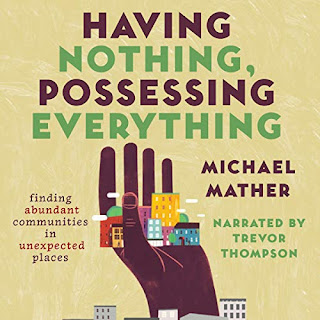
  Michael Mather, is the author of "Having Nothing, Possessing Everything” and an advocate for asset-based community development (ABCD). Mather advocates for never doing something for someone in a community that they can do for themselves. "If we begin looking for people's gifts rather than people's needs, then even better things than we thought possible might materialize," Mather, former pastor at Broadway United Methodist Church located in an urban, low-income neighborhood of Indianapolis. If you want to improve a neighborhood, involve the people there. "I began my ministry seeing scarcity, seeing only the things that seemed to be missing in the neighborhoods where I pastored. What I learned from those neighborhoods was how to see the abundance," said Mather. The transformation began at the food pantry run at the church. "We stopped asking people about how poor they are and started asking about skills and interests instead," said M...